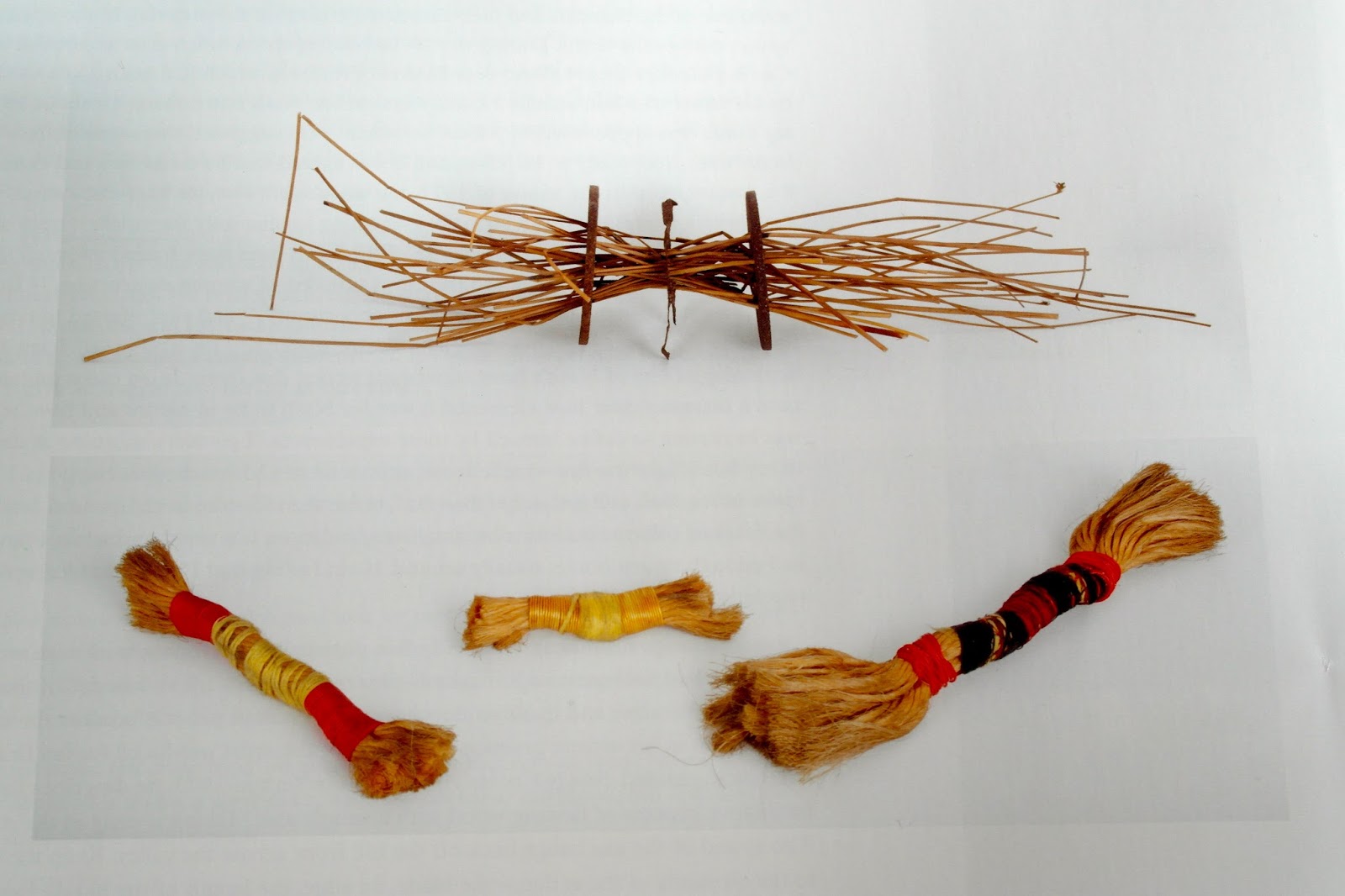
Many artists use the act of wrapping and binding. It may be the end product of their work or it may be as a starting point to inspire further ideas. It may be on a small scale or very large, requiring a great physical undertaking. The artist may be wanting to draw attention to the object they are wrapping by subverting it's form and forcing us to look at a familiar thing in a new way. Or they may be simply exploring the materials that they are using, seeing how far they can push the media.
The following artists all use the technique, but in very different ways (click on their names to see more information).
At first they wrapped everyday objects such as bottles and chairs, but they graduated to trees and buildings - most famously the Reichstag in Berlin.
After years of negotiations, the artists persuaded the German Parliament to let the project go ahead in 1995. The wrapping of this iconic symbol of decades of turmoil reflected the fresh start for the newly unified German people.
Born with Downs Syndrome and profoundly deaf, Judith spent many years in an institution before discovering an outlet for her creativity through constructed textiles - wrapping and binding everyday objects with whatever materials came to hand. She achieved international recognition for her work.
The tightly bound objects can be seen as a metaphor for the years Judith spent trapped inside herself unable to communicate with the outside world.
Working with fine copper thread, Alice appears to perform a dance as she wraps her chosen objects. Her work is concerned with memory and the viewer is challenged to decipher the identity of each object on display
David works with trees, both still growing and naturally fallen, carving and burning the wood to create his sculptures. He completely understands how the wood grows and how it behaves when manipulated.

Early in his career he would experiment with natural materials; binding, burning and bending to help him understand their properties.
Working with everyday detritus such as plastic bottles and tubing, electrical parts and wiring, boxes and cans, Sarah builds large scale installations of interconnected and suspended fragments.
Electric fans and light bulbs are often placed around the installation to create movement and pockets of light. The overall impression is of a circuit board or a map of the leftovers of modern life.